Key facts
- Years active
- 1908–1953
- Founded by
- John North Willys
- Country
- United States
- Headquarters
- Toledo, Ohio, United States
- Parent company
- Kaiser Motors
- Legal name
- Willys-Overland Motors, Inc.
- Famous models
- Willys MB, CJ-2A, Jeepster, Willys Aero, Overland Whippet
Willys-Overland Brand History
John North Willys acquired the Overland Automotive Division of the Standard Wheel Company in 1908. The company was officially renamed Willys–Overland Motor Company in 1912 and maintained its headquarters in Toledo, Ohio throughout its existence.
From 1912 to 1918 Willys-Overland ranked as the second-largest automobile producer in the United States after Ford. The company introduced the Willys-Knight line equipped with sleeve-valve engines in 1913 after acquiring the relevant license. In 1926 it launched the Willys–Overland Whippet small car line, which reached peak production of its 100,000th unit in 1928.
The Great Depression brought major challenges. Willys-Knight production ended in 1933 after the liquidation of related assets. In 1932 Ward M. Canaday became chairman and led a company reorganization. The firm was restructured as Willys–Overland Motors in 1936 and focused on redesigning its four-cylinder models between 1937 and 1939 with streamlined bodies and improved engines.
Willys began production of the Willys MB military Jeep in November 1941. After World War II the company transitioned to civilian vehicles, launching the CJ-2A civilian Jeep in 1945–1946. Between 1946 and 1948 it introduced the Willys Jeep Utility Wagon and Utility Truck, early ancestors of modern SUVs. In 1953 Kaiser Motors acquired the company, changing its name to Willys Motor Company and ending the Willys-Overland era. Willys Motors continued under Kaiser ownership until 1963, when it was renamed Kaiser Jeep Corporation.
Willys-Overland Logo Evolution
1910–1926: Early Radiator Emblem Period
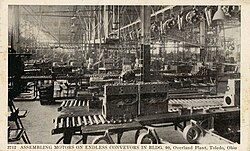
- Design: Crest-style radiator emblems and badges often featuring detailed text
- Colors: Metallic brass, silver, gold tones on physical emblems
- Changes: Multiple versions existed for specific models such as the Whippet Four and Willys Six
- Context: Used on vehicles during the period when Willys-Overland ranked as the second-largest US producer and before the shift toward Jeep-focused production
1947–1953: Willys Overland Script Logo Period
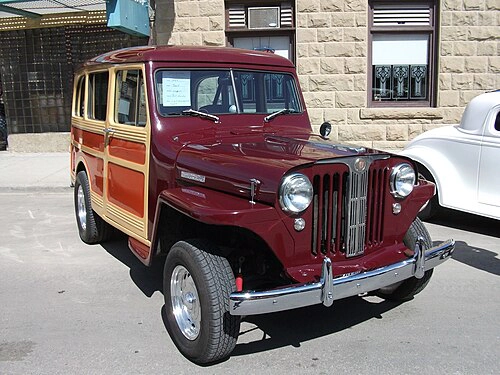
- Design: Stylized script typography displaying the Willys Overland name
- Colors: Primarily black on white or monochrome presentations
- Changes: Simplified design reflecting the company’s postwar focus on Jeep vehicles
- Context: Applied to civilian models including the Jeepster and Station Wagon during the final independent era before the 1953 Kaiser acquisition
Willys-Overland logo history reflects the company’s transformation from a broad automobile manufacturer to a producer centered on rugged utility vehicles. The Willys-Overland emblem evolved alongside major milestones including the development of the original military Jeep and the postwar civilian Jeep lineup. These visual elements remain part of the brand’s lasting automotive heritage.