Key facts
- Years active
- 2012–2022
- Founded by
- Kai Johan Jiang
- Country
- Sweden
- Headquarters
- Trollhättan, Sweden
- Parent company
- Evergrande Group
- Legal name
- National Electric Vehicle Sweden AB
- Famous models
- 9-3, Emily GT, Sango
NEVS Brand History
NEVS was founded in 2012 by Kai Johan Jiang specifically to purchase the assets of Saab Automobile. The company inherited the Swedish production facilities in Trollhättan and initially operated under a licensing agreement that allowed limited use of the Saab name on vehicles, though without the griffin logo. Its strategic direction centered on shifting from traditional automotive manufacturing to pure electric vehicle development while leveraging the existing Swedish engineering heritage.
A series of ownership changes shaped the company’s path. An early partnership with Qingdao ended in 2014, leading to severe financial difficulties. The company entered bankruptcy protection that same year and permanently lost the rights to use the Saab brand name. New Chinese investments arrived between 2015 and 2016, followed by acquisition of majority control by the Evergrande Group in 2019. Strategic partnerships were formed with companies such as Dongfeng and Panda New Energy during this period.
Key corporate milestones reflect the turbulent history. Limited Saab 9-3 production restarted in 2013 but was suspended in May 2014. NEVS later revived 9-3 EV production at a new Tianjin, China plant from 2019 to 2022, its final vehicle output before the company wound down manufacturing. The company revealed self-driving concepts including the Sango and Emily GT between 2020 and 2021. By 2023 NEVS entered hibernation mode to avoid bankruptcy, sold its Trollhättan factory to Stenhaga Invest, implemented major layoffs, and cancelled a deal with EV Electra. In 2024 the remaining staff were made redundant and the company was formally liquidated.
Nevs Logo Evolution
2012–2016: Full Name Logo
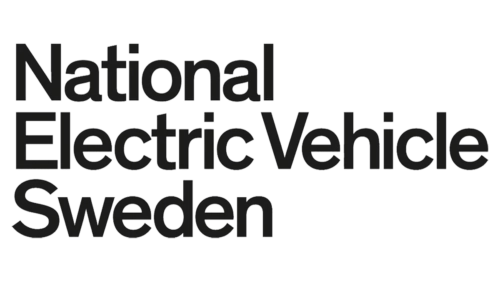
The first logo appeared during the initial Saab asset acquisition phase and reflected the company’s formal corporate identity at the time. It was used while vehicles still carried Saab badging under the temporary licensing agreement.
- Design: Three-line text-only layout spelling out the complete company name
- Colors: Black lettering on a plain white background
- Changes: Simple corporate typography without any graphic symbols
- Context: Employed from the 2012 founding through the 2014 financial crisis and loss of Saab naming rights
2016–Present: Abbreviated NEVS Mark
The current logo was introduced in 2016 when the company officially abandoned all Saab branding and established an independent identity. This redesign aligned with new Chinese investment and the strategic pivot toward a global electric vehicle brand.
- Design: Abbreviated “NEVS” wordmark in a custom modern sans-serif font
- Colors: Thin black lines on white creating a minimalist appearance
- Changes: Rounded ends on letter strokes for a progressive, contemporary feel
- Context: Launched alongside the public unveiling of the new NEVS brand following the loss of Saab name rights in 2014
Nevs logo history is closely tied to the company’s corporate milestones and ownership transitions. The shift from the full name to the short NEVS symbol in 2016 marked a definitive break from its Saab predecessor. This evolution from lengthy descriptive text to a laconic modern mark reflected the brand’s ambition to position itself as a forward-looking electric vehicle manufacturer.
The Nevs car logo has remained unchanged since 2016 despite subsequent ownership changes and financial challenges. Its clean, minimalist style continues to represent the company’s Swedish engineering roots under Chinese ownership. Many enthusiasts look for high-quality versions including a Nevs logo transparent background for reference and design projects.
The Nevs emblem maintains the same visual characteristics established in 2016, emphasizing simplicity and modernity. For those seeking visual assets, both historical and current versions of the Nevs logo png are often referenced in automotive design archives. The progression from the original three-line text version to the present-day mark illustrates how visual identity adapted to major strategic turns in the company’s short history.