Key facts
- Years active
- 1953–2008
- Country
- Serbia
- Headquarters
- Kragujevac, Serbia
- Parent company
- Fiat
- Legal name
- Zastava Automobili
- Famous models
- 750, Yugo, Florida, Skala
Zastava Automobiles Overview
Zastava Automobiles operated as the main automotive brand from the historic Zavodi Crvena Zastava organization in Kragujevac, Serbia. The company originated from a cannon foundry established in 1853 and transitioned into vehicle manufacturing in the 1950s through a partnership with Fiat.
Production officially began in 1953 following an employee referendum. This marked the start of the automotive division under the Fiat licensing agreement signed in 1954. The manufacturer represented Serbian and former Yugoslav industrial capability until its closure.
Brand Timeline
Key events directly connected to visual identity changes include:
- 1953: Automotive production begins following employee referendum
- 1954: Formal cooperation agreement signed with Fiat
- 1971: Major redesign of visual identity
- 1991: Second redesign amid regional changes
- 2000: Restructuring as joint-stock company with final visual update
- 2008: Production ends with bankruptcy initiated on 21 November
Zastava Logo Evolution
The Zastava logo underwent four distinct phases between 1953 and 2008, each reflecting corporate developments at the time.
1953 – 1970: Early Automotive “Z” Symbol
- Design: Bold stylized letter Z with sharp angles suggesting movement
- Colors: Green backdrop with the Z symbol
- Changes: First use of the Zastava car logo in the automotive era
- Context: Marked the official start of car production in 1953
1971 – 1991: Circular Monochrome “Z”
- Design: Stylized Z enclosed within a bold circular boundary
- Colors: Stark black and white color scheme
- Changes: Updated from the earlier green version to a monochrome circular Zastava symbol
- Context: Applied during the height of the company’s manufacturing activity
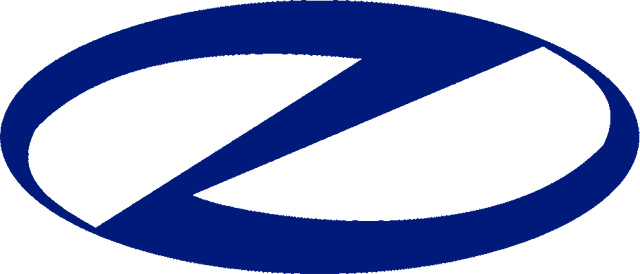
1991 – 2000: Blue Elliptical Dynamic Design
- Design: Dynamic diagonal division inside an elliptical frame
- Colors: Bold blue color throughout
- Changes: Replaced the circular frame with an elliptical Zastava car symbol
- Context: Introduced in 1991 alongside broader geopolitical developments
2000 – 2008: Text-Enhanced Monochrome Ellipse
- Design: Elliptical frame combined with explicit ZASTAVA lettering
- Colors: Monochrome palette
- Changes: Integrated full brand name with the existing symbol for the Zastava logo
- Context: Used until production ceased in 2008
Direct Links Between Corporate History and Logo Changes
The evolution of the Zastava logo directly reflected major corporate milestones. The 1953 founding of the automotive division led to adoption of the first stylized green Z design. Corporate modernization in 1971 triggered the transition to the black and white circular version used through 1991.
Regional political changes in 1991 prompted the blue elliptical logo with its diagonal split. Company restructuring into a joint-stock entity in 2000 resulted in the final update that incorporated the full brand name text. The 2008 bankruptcy and subsequent acquisition by Fiat marked the end of all Zastava logo usage in the automotive context.
The brand’s visual identity evolved alongside its corporate journey from initial Fiat partnership through to its eventual closure. This progression created a documented Zastava logo history that illustrates the manufacturer’s development over five decades.
Fiat took over the Kragujevac facilities after production ended, bringing an end to independent Zastava automobiles manufacturing. The company’s legacy remains as a symbol of Serbian industrial history through its distinctive emblems across four distinct eras.